

Contents
You don’t need perfect data — or cutting-edge tools — to begin your organization’s AI journey. What truly matters is clarity. Clarity about where you’re headed, what problems you care about solving, and which levers you already have in hand.
A majority of companies stall before they even begin. They wait for clean data. They wait for a full-stack AI team. They wait for “the right time.” The result? Momentum stalls. Opportunities pass by.
But here’s the truth: AI readiness isn’t about perfection. It’s about understanding where your organization can create impact right now. And the secret to unlocking that impact is a simple, structured approach — one that helps leadership teams identify where to start and how to build real momentum. That approach centers around reviewing four pillars: Strategy, Operations, Talent, and Buy-In.
In this article we share an assessment for AI readiness and walk through what each pillar assesses, why it matters, and how you can begin acting today —even if your tech stack isn’t ideal and your team is in the walk phase.
Why Readiness Matters More Than Perfect Conditions
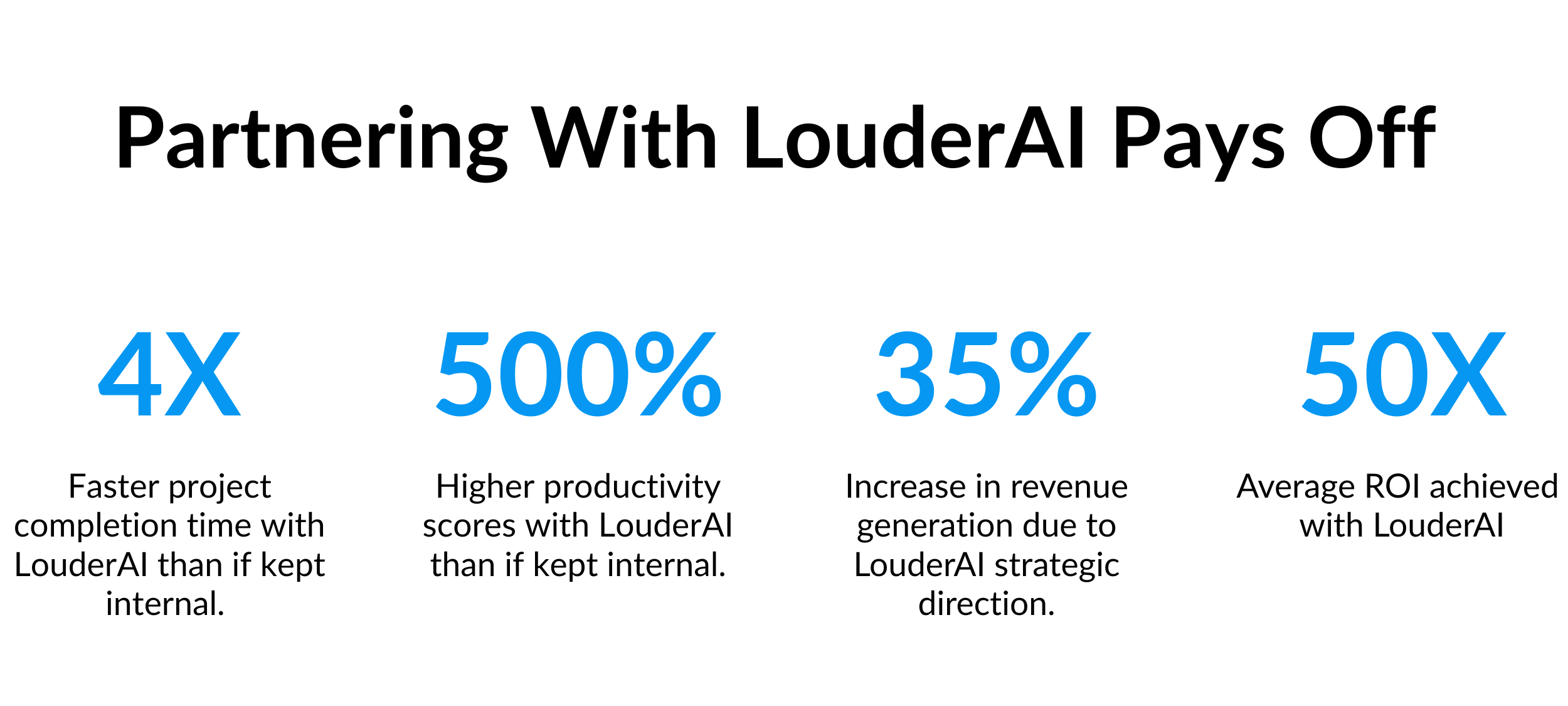
It’s tempting to believe that AI adoption belongs at the end of a long checklist: pristine data, modernized infrastructure, specialized talent, and perfect timing. But the reality is far less forgiving. Organizations that wait for ideal conditions are quickly falling behind. LouderAI clients are already seeing up to 50X ROI and as much as a 500% increase in productivity by working with our AI business consultants to identify high-impact opportunities and activate AI strategically.
In practice, most organizations don’t need a full transformation to begin — they need clarity on where and how to start. Successful organizations don’t begin with sweeping AI deployments. They start with small, intentional pilot projects that help teams build confidence, validate value, and learn how AI fits into real workflows.
And these pilots aren’t random — they emerge from a clear AI Strategy that identifies organizational readiness and quick-win opportunities to ensure teams move in the right direction from day one. When readiness becomes a strategic lens, organizations can begin immediately — and momentum follows.
The Four Key Areas of AI Readiness
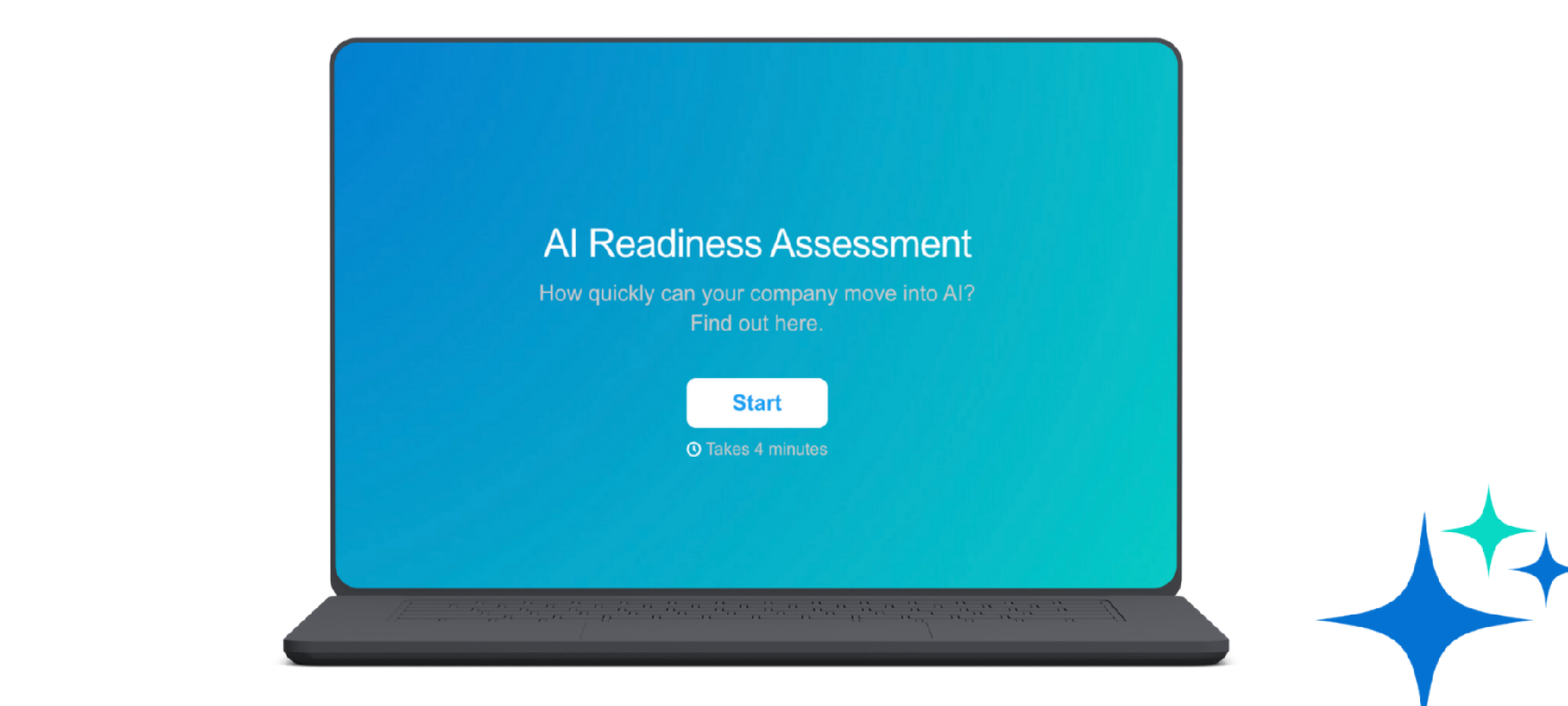
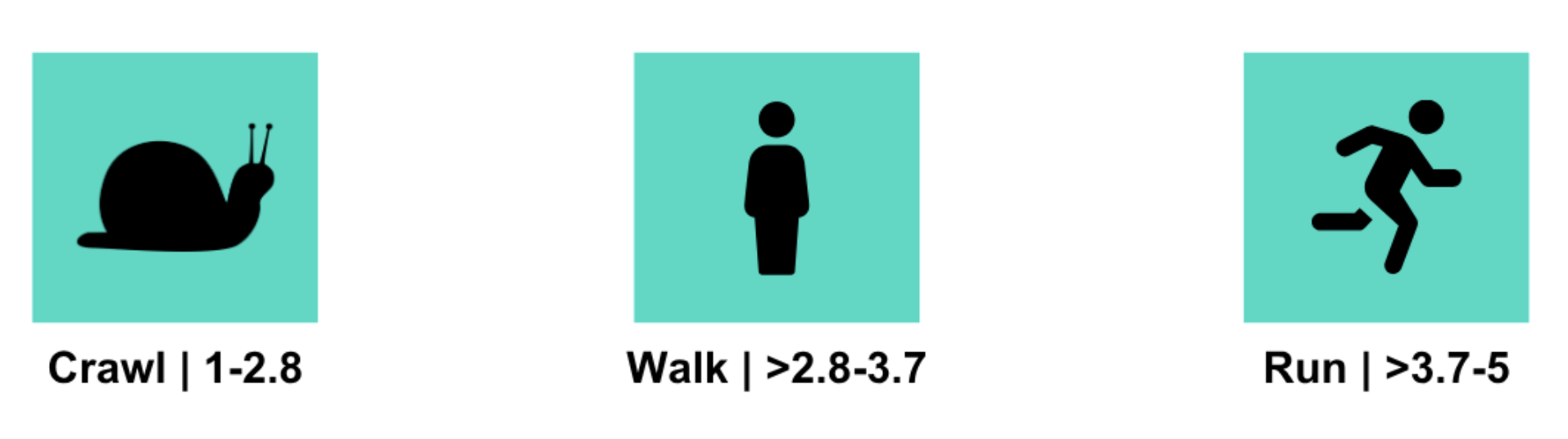
To help organizations cut through uncertainty and understand exactly where they stand, the LouderAI readiness assessment was designed specifically for business leaders. In just a few minutes, companies can evaluate their preparedness across the four dimensions that matter most—Strategy, Operations, Talent, and Buy-In—and receive a readiness score that maps them into one of three categories: Crawl, Walk, or Run.
This framework helps leaders understand how fast they can move, where the greatest opportunities exist, and which areas should be strengthened before scaling AI more broadly. Here’s a closer look at what the assessment evaluates.
1. StrategyStrategy readiness reflects how clearly your organization understands where AI can create measurable business value.
- Does your company have a documented AI strategy?
- Has your leadership team set specific AI adoption goals?
- Has your company successfully implemented AI-driven transformations in the past?
2. Operations
Operational readiness determines whether your existing processes, systems, and data environment can support AI adoption effectively.
- What percentage of your processes are currently automated using AI-enabled tools?
- Does your organization have data governance practices to ensure AI can access quality, structured data?
- Are there KPIs to measure the success of AI-related initiatives?
3. Talent
Talent readiness evaluates whether your workforce has the skills, confidence, and collaboration needed to adopt and scale AI successfully.
- Do employees actively use AI features in existing tools?
- Has your company provided resourced to upskill employees in AI literacy?
- Does leadership encourage experimentation with AI tools?
3. Buy-in
Buy-in readiness measures the degree to which leadership and culture support AI experimentation, change, and long-term integration.
- Does your C-Suite view AI as critical to future competitiveness?
- Are there dedicated budget and resources allocated to AI projects?
- Has your organization mapped out specific departments or workflows for AI implementation?
Understanding Your Readiness Score and Practical Next Steps
The assessment uses a weighted scoring method to place your organization into one of three categories: Crawl, Walk, or Run. This helps leaders understand the pace that’s right for your team—steady enough to be successful, but fast enough to build momentum. It also sets clear expectations so everyone knows where you’re starting and what progress is realistic moving forward.
Crawl
The Crawl stage means your organization is at the very beginning of its AI journey. This isn’t a setback—it’s a valuable opportunity to build a strong, sustainable foundation for future success.
Being in the Crawl stage typically means:
- Your processes and systems rely heavily on traditional methods, with limited use of emerging technologies.
- Your team will benefit from focused training and change-management support to build confidence and familiarity with AI.
- A slower, more structured pace will help employees learn and adopt AI without feeling overwhelmed.
Practical next steps:
Every organization starts somewhere, and recognizing your current state is the first step toward meaningful progress. At this stage, the priority is increasing comfort with AI, strengthening foundational capabilities, and introducing tools at a manageable pace.
Walk
Landing in the Walk stage means your organization is well-positioned to begin unlocking the value and competitive advantage of AI.
Being in the Walk stage typically means:
- Your organization has begun experimenting with AI or modernizing processes, and early momentum is taking shape.
- Teams show a mix of enthusiasm and hesitation, signaling the need for clear guidance and consistent communication.
- There is growing alignment around the role AI can play, but additional structure is needed to support broader adoption.
Practical next steps:
The Walk stage is about finding the right balance—building momentum while keeping the organization aligned and confident. Equip early adopters with tools and empower them as change champions, while offering targeted training to teams that need more support. At this stage, developing an AI Strategic Roadmap is essential for clarifying priorities, unifying teams, and ensuring AI initiatives scale smoothly over time.
Run
Organizations in the Run stage are ahead of the curve and well-positioned to scale AI initiatives with speed, clarity, and strategic discipline.
Being in the Run stage typically means:
- Your systems and processes are mature, integrated, and operate smoothly across the organization.
- Your culture embraces adaptability, and teams are comfortable navigating ongoing growth and transformation.
- Leadership uses strategic planning to consistently meet key milestones and fuel innovation.
Practical next steps:
At this level, you can confidently move at a faster pace—often executing multiple AI initiatives each year. However, it’s still important to avoid overextending. Even highly prepared organizations benefit from a clear roadmap and guidance from AI business consultants. Moving too quickly without strategic alignment can dilute impact and limit long-term ROI.
If you’ve completed the LouderAI Readiness Assessment for business and are ready to move beyond experimenting, now is the perfect time to take the next step. While only 16% of AI initiatives ever make it past the pilot phase, the right strategic guidance can put your organization in that winning minority. Schedule a no-pressure intro call to get started. LouderAI will help you harness the power and profitability of Artificial Intelligence—no matter your level of AI readiness.

About the author: Andrew is the Founder & CEO of LouderAI, a Dallas-based consultancy dedicated to helping organizations unlock their full potential through cutting-edge AI solutions.
With nearly two decades in management consulting and a track record advising Fortune 500 clients, he’s earned recognition as a Dallas Business Journal 40 Under 40 honoree and Vistage Top Speaker.